Stay Informed: Your One-Stop Hub for All Current Legal News Updates
SangsLegal News The Supreme Court of India strikes down electoral bonds scheme as "unconstitutional" |
|
The Supreme Court of India strikes down electoral bonds scheme as "unconstitutional". 
|
SangsLegal News The Supreme Court of India placed significant emphasis on key aspects pertaining to the adverse possession principle. |
|
In a recent case concerning the declaration of title, the Supreme Court of India emphasized key aspects related to the principle of adverse possession. The Court underlined that the claim of adverse possession combines both factual evidence and legal considerations (Karnataka Board of Wakf v. Govt. of India., (2004) 10 SCC 779). When asserting adverse possession, the person claiming it must establish the following points: (a) the date they acquired possession, (b) the nature of their possession, (c) whether the other party was aware of their possession, (d) the duration of their possession, and (e) that their possession remained open and undisturbed. The Court further emphasized that a) an individual asserting adverse possession lacks any legal rights supporting their claim,due to the fact that the claimant seeks to undermine the lawful rights of the true owner. b) The period of limitation does not begin from the date when the plaintiff's right of ownership is established, but rather from the date when the defendant's possession turns adverse. c) The crucial elements to consider in adverse possession cases are the concrete evidence of possessing the property exclusively and the intention of possessing it as the rightful owner, excluding the actual owner. * Adverse possession is a legally recognized mechanism that allows an individual who is not the rightful owner but occupies a plot of land to acquire title and ownership over that land. This occurs after a specific duration of time has lapsed, as prescribed by the law.
|
SangsLegal News The State Bar Council lacks the authority to question the eligibility of individuals to obtain a law degree certificate based on the grounds of ineligibility :Karnataka High court |
|
The Karnataka High Court has overturned the decision of the Karnataka State Bar Council to reject the enrollment of a government employee who pursued a law degree while in service and applied for enrollment after retirement. The refusal was based on the fact that the individual failed to provide any documents proving attendance in classes conducted by the college.The court also observed that it is not within the purview of any other authority to challenge the eligibility of obtaining the certificate, unless and until the certificate is revoked by a competent authority and/or by a Court of law.
|
SangsLegal News A demand notice served to the drawer of a cheque using 'email or WhatsApp' under Section 138 of the Negotiable Instrument Act, will be considered as a valid notice : Allahabad High Court |
|
In a landmark ruling, the Allahabad High Court has declared that a demand notice served to the drawer of a cheque using 'email or WhatsApp' under Section 138 of the Negotiable Instrument Act, will be considered as a valid notice. Furthermore, the court has ruled that if such a notice meets the criteria specified in Section 13 of the Information Technology Act, it will be deemed dispatched and served on the same date.
|
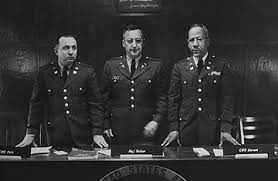
SangsLegal News In instances where charges are not confirmed during court-martial proceedings, it is still possible to independently initiate proceedings against erring officials: Rajasthan High Court |
|
The Rajasthan High Court has recently ruled that in cases where the Confirming Authority does not endorse the findings on a particular charge following General Court-Martial (GCM) proceedings, the Chief of Army Staff and other officers possess the authority to take independent action against the personnel at fault to terminate their services.The court noted that the concerned authorities can utilize Section 20 of the Army Act, 1950 in conjunction with Rule 17 of the Army Rules, 1954 to issue a show cause notice to erring personnel before their services are terminated. This can be done even if the individual in question has already undergone court-martial proceedings.
|
 +91 88262 30101